A NEW SANCTUARY FOR A MULTI-GENERATIONAL FAMILY
Double Stoop House
LOCATION
Brooklyn, NY
SCALE
4,000 sf
DATES
2023
STATUS
Completed
Merit winner in the 2023 Residential Architect Design Awards
Brooklyn, NY
SCALE
4,000 sf
DATES
2023
STATUS
Completed
Merit winner in the 2023 Residential Architect Design Awards
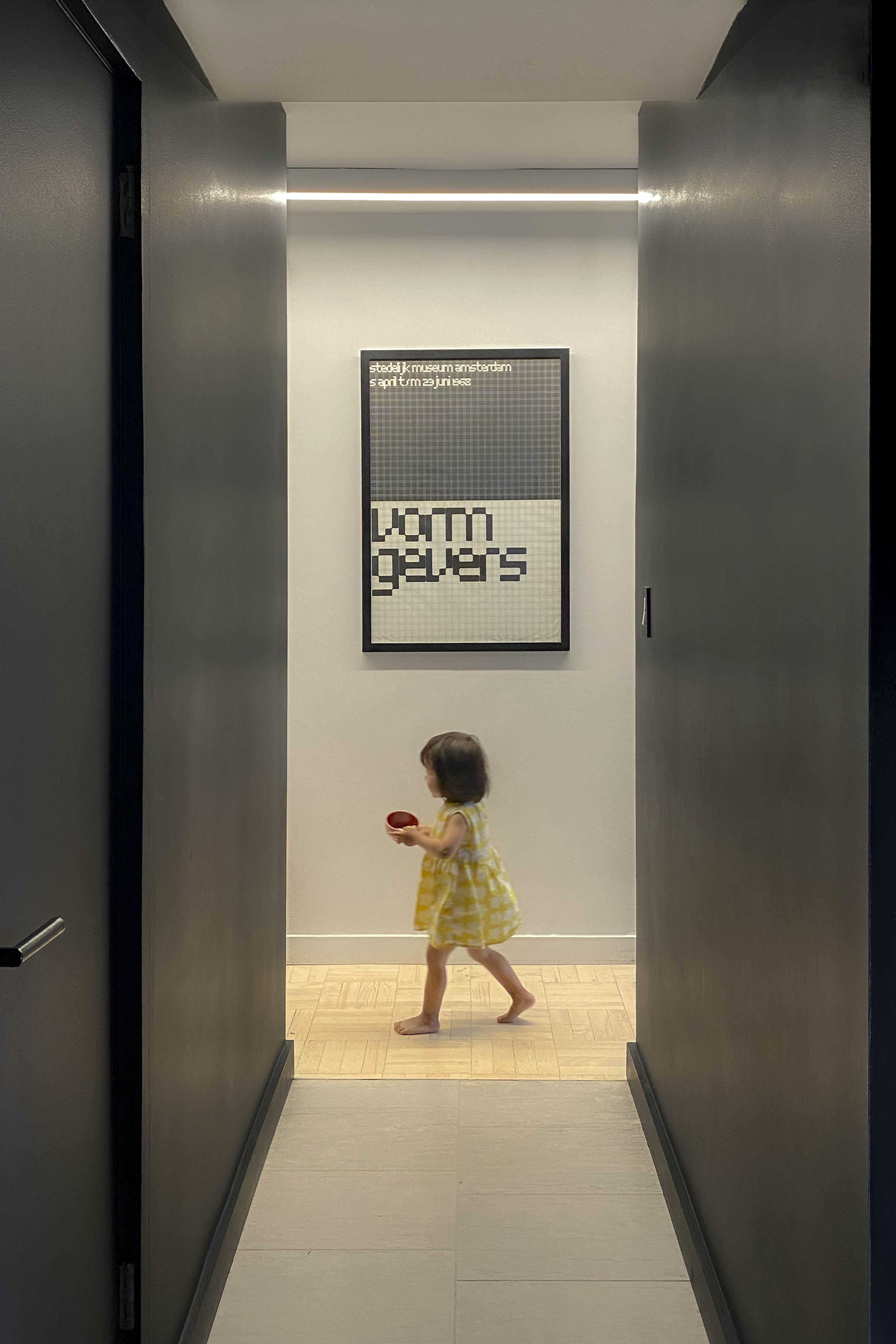
Refurbishment of a 1890’s Brooklyn Brownstone, the project is organized across the section of the building and embraces multi-generational living. Each generation of the owner’s family “owns” a floor of the building, with each floor having convenient access to an adjacent outdoor environment.
The Grandparent’s floor is at the garden level, providing ease of access and the potential to age-in-place. A communal floor exists on what is traditionally the Parlor Floor. The Parent’s floor is on the 2nd level and provides sanctuary for rest and focus. The uppermost 3rd floor is the Children’s Floor, and includes bedrooms, a play room, and a reading nook.
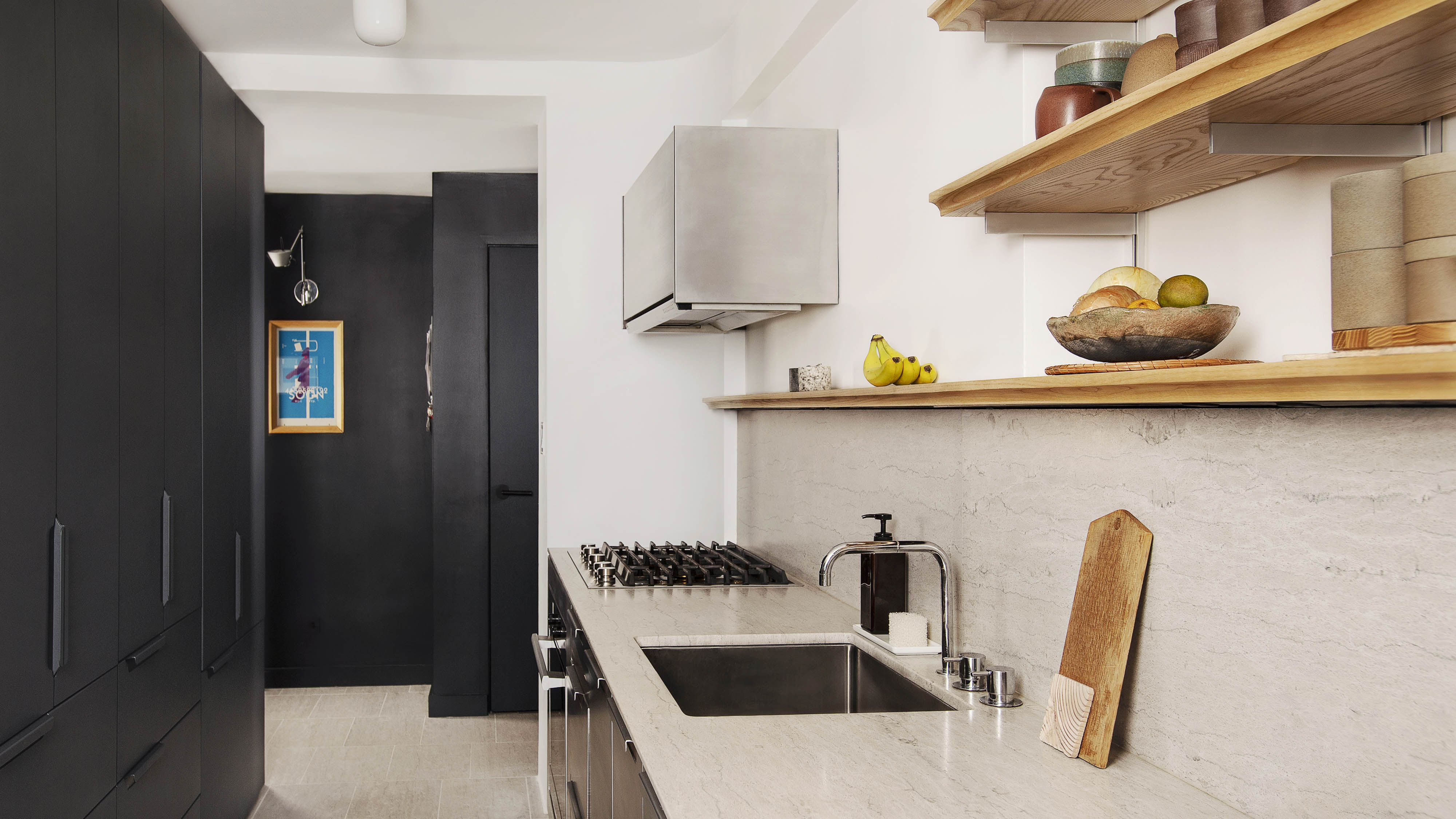
As with any historic renovation, the challenge is to marry the old with the new, to set up a dialogue between the two without historicizing the new. The tensions that exist between old and new were embraced in the project. In contrast to the deep ornate moulding profiles and plaster filigree of the living room, the new kitchen millwork employed use of a triangular tambour profile, adding depth, shadow, and texture to an otherwise monolithic and restrained formal expression.
Similarly, the Communal Floor (aka Parlor Floor) is organized as a series of “open chambers”. Rather than provide a series of enclosed rooms for each space, the floor plan suggests zones with the use of a series of large framed enfilade openings. These frames are large enough to offer the benefits of an open plan while still providing an architectural structure to create more intimate zones.
The original brownstone facade was refurbished to match the historic design. Rooms abutting the historical facade were designed to retain the Italianate character, with refurbished and recreated elements including window shutters, crown molding, stair rails, medallions and chandeliers. The presence of contemporary details increases as you progress to the rear of the building.
Similarly, the Communal Floor (aka Parlor Floor) is organized as a series of “open chambers”. Rather than provide a series of enclosed rooms for each space, the floor plan suggests zones with the use of a series of large framed enfilade openings. These frames are large enough to offer the benefits of an open plan while still providing an architectural structure to create more intimate zones.
The original brownstone facade was refurbished to match the historic design. Rooms abutting the historical facade were designed to retain the Italianate character, with refurbished and recreated elements including window shutters, crown molding, stair rails, medallions and chandeliers. The presence of contemporary details increases as you progress to the rear of the building.

The tensions
between old and new
were embraced.
Light is drawn downward
into the depths of the building.
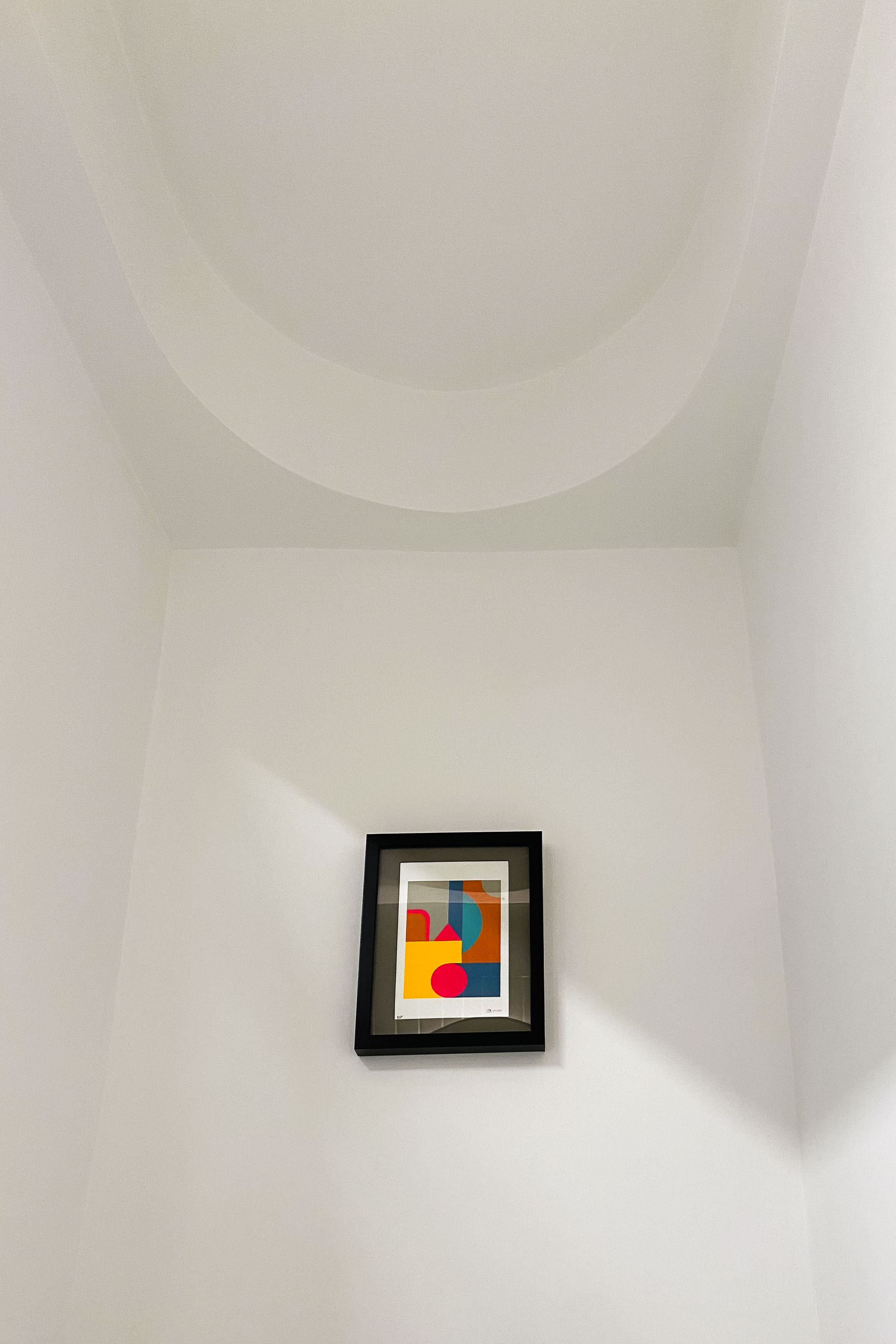
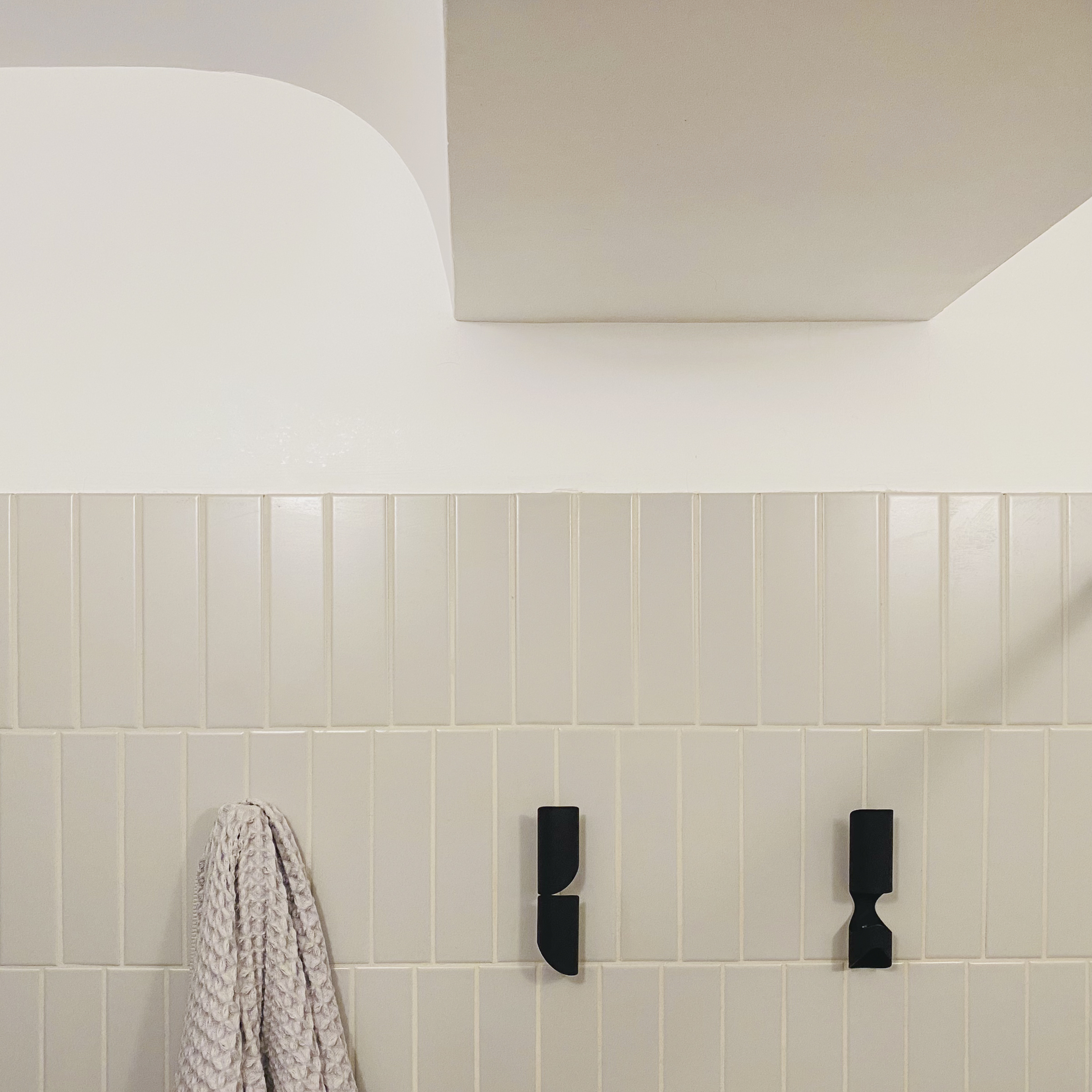
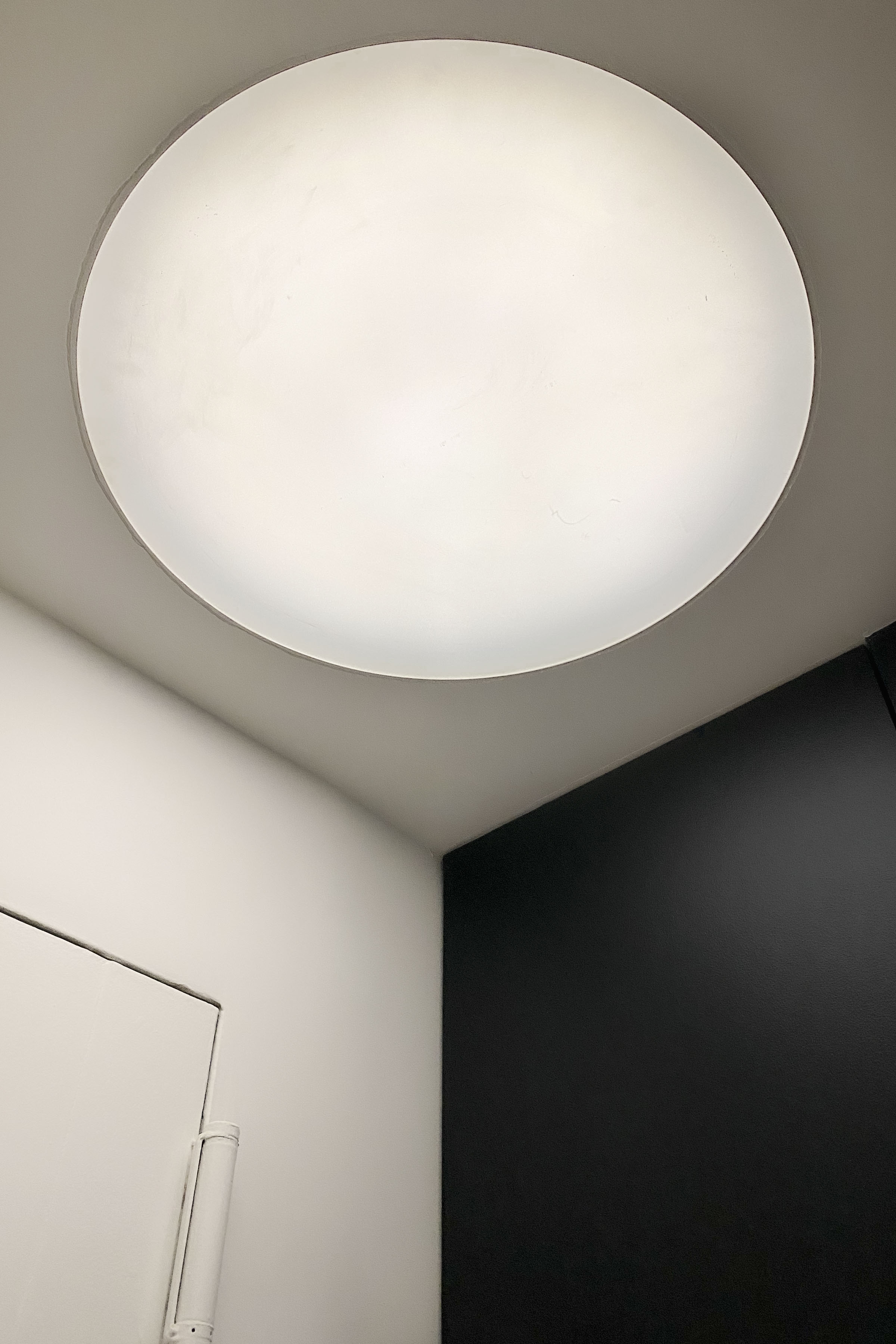
The interventions also sought to address challenges in Brownstones and other rowhouse typologies such as their limited ability to access natural light. Via a series of three cylindrical skylights, the light is drawn downward and into the depths of the building. The Parent’s Bathroom borrows light through a 1-story cylindrical skylight shaft. It is positioned over a clawfoot bathtub creating an element of surprise and calm.
On the exterior, the rear of the house is in dialogue with the front. Like the front of the house, the most public and communal floor is connected to the rear yard via its very own stoop. The stoop is accessed via a series of sliding doors that disappear into a pocket for the complete ‘indoor-outdoor’ experience.
The monolithic and volumetric quality of the addition is softened with a subtle shift in texture. The brick pattern changes across the height of the building, with bricks projecting outward at the bottom of the facade, and gradually receding towards the top of the facade. The gradual shift is a nod to the classical divisions of base, middle, and capital. To balance aesthetics with building performance, the rear facade is made up of a thermally broken brick rain screen assembly to increase the thermal performance of the wall. Passive house techniques and principles were applied to enhance the energy efficiency of the brownstone with triple glazed units to improve thermal efficiency as well as mitigate outdoor noise.
On the exterior, the rear of the house is in dialogue with the front. Like the front of the house, the most public and communal floor is connected to the rear yard via its very own stoop. The stoop is accessed via a series of sliding doors that disappear into a pocket for the complete ‘indoor-outdoor’ experience.
The monolithic and volumetric quality of the addition is softened with a subtle shift in texture. The brick pattern changes across the height of the building, with bricks projecting outward at the bottom of the facade, and gradually receding towards the top of the facade. The gradual shift is a nod to the classical divisions of base, middle, and capital. To balance aesthetics with building performance, the rear facade is made up of a thermally broken brick rain screen assembly to increase the thermal performance of the wall. Passive house techniques and principles were applied to enhance the energy efficiency of the brownstone with triple glazed units to improve thermal efficiency as well as mitigate outdoor noise.
The gradual shift is a nod
to the classical divisions of
base, middle, and capital.

Photography by Nicole Franzen

BENDING TIME THROUGH WARM MODERNIST DESIGN
Rockefeller Apartment
TYPE
Apartment renovation
LOCATION
Manhattan, NY
SCALE
2,700 sf
DATE
2025
STATUS
Completed
COLLABORATORS
Nicholas Potts, Design Architect
Armando Aguirre, Interior Designer
PUBLICATION
Architectural Digest
Apartment renovation
LOCATION
Manhattan, NY
SCALE
2,700 sf
DATE
2025
STATUS
Completed
COLLABORATORS
Nicholas Potts, Design Architect
Armando Aguirre, Interior Designer
PUBLICATION
Architectural Digest
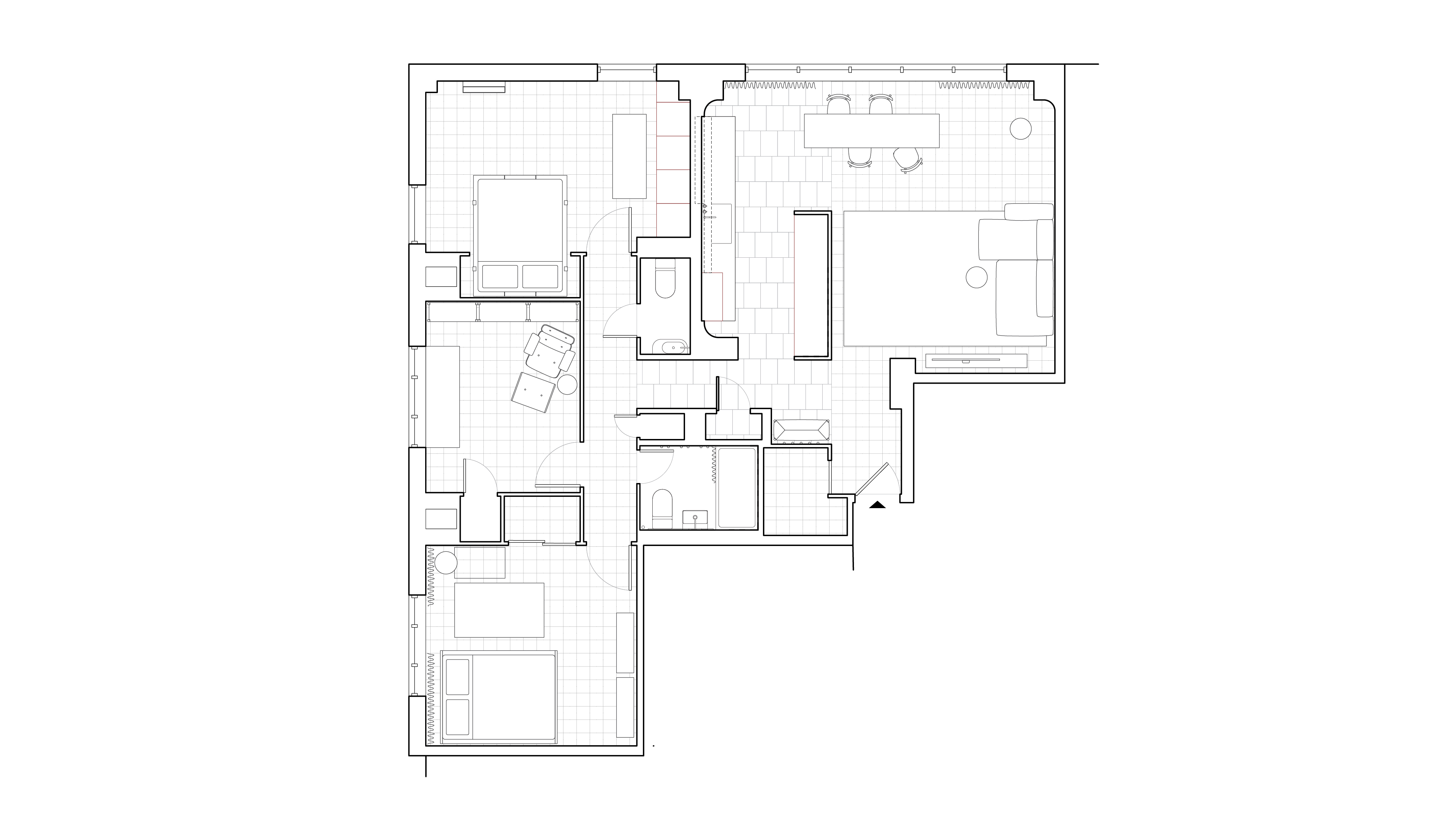
Commissioned by John D. Rockefeller Jr. and Nelson Rockefeller and completed in 1937, the Rockefeller Apartments stands as a landmark of the International Style - arguably the city’s first. Architect Wallace Harrison, a key figure behind Rockefeller Center, designed the complex shortly after embracing Bauhaus principles, originally intending it as a middle-class residence with modest, functional units.
This 2025 renovation sought to elevate the space to its "International" namesake, honoring its modernist spirit and architectural heritage. Every design intervention was grounded in rigorous historical research and period-appropriate sourcing, ensuring the apartment felt revitalized rather than frozen in time.
The client - a dedicated collector of modern art and furniture who relocated from a Stanford White-designed home in Murray Hill -approached the acquisition as one would a fine work of art. To reflect this, majority of the interior is furnished with vintage pieces, featuring iconic designs such as Jens Risom Playboy chairs, a George Nelson shelving system, and an original Ellsworth Kelly painting.
This 2025 renovation sought to elevate the space to its "International" namesake, honoring its modernist spirit and architectural heritage. Every design intervention was grounded in rigorous historical research and period-appropriate sourcing, ensuring the apartment felt revitalized rather than frozen in time.
The client - a dedicated collector of modern art and furniture who relocated from a Stanford White-designed home in Murray Hill -approached the acquisition as one would a fine work of art. To reflect this, majority of the interior is furnished with vintage pieces, featuring iconic designs such as Jens Risom Playboy chairs, a George Nelson shelving system, and an original Ellsworth Kelly painting.
The design approach intentionally introduces warm, organic materials, specifically wood and cork, that were absent from the building’s original minimalist interiors. Expressed with bold intensity, these elements establish a foundation of tactile, sensuous comfort. At the entry, this transition is immediate: cozy cork meets Nelson Rockefeller-approved marble, creating a sophisticated softening of the threshold.
By relocating elements to the perimeter, a formal entrance gallery now anchors the home. Inspired by the grand prewar residences of New York, this layout successfully integrates the combined units, providing a sense of scale and ceremony that exceeds the building’s original, utilitarian floor plan.
Warm materials like wood and cork create a base of sensuous comfort
The result is a space that achieves what modernist manifestations often lack: warmth and approachability. The apartment successfully bends time without announcing the trick, transporting the space simultaneously backward and forward while maintaining elegant, functional design that adheres to modernist values and delivers exceptional livability.
Photography by Adrian Gaut

PUSHING THE BOUNDARIES OF THE WORKPLACE
Staging Ground
LOCATION
Manhattan, NY
SCALE
8,000 sf
DATES
2024
STATUS
Completed
Manhattan, NY
SCALE
8,000 sf
DATES
2024
STATUS
Completed
Located in the Garment District of New York City, Staging Ground represents TAD’s continued growth. Occupying 8,000 square feet of a 1920 Lefcourt loft building, the project continues the tradition of light manufacturing in the city center. With 5 distinct interventions, the project enables TAD to tailor the space to their needs and explore the boundaries of the workplace.
The Entry Portal features two 900-pound, 2-sided LED clad doors, as well as LED clad walls and ceiling, to create a dynamic and immersive tunnel experience. These doors are essential for managing the flow of traffic and ensuring a controlled entry sequence. Additionally, they offer alternate viewing perspectives, potentially showcasing digital content or artistic displays. When closed, the doors provide security, safeguarding the entrance and deterring unauthorized access
The Stage is an open floor with calibrated floor graphics serving as both a navigational tool and a visual anchor. Referencing the use of “spike tape” in theater, the wayfinding graphics are designed in collaboration with Once-Future Office. These floor graphics serve as both a navigational tool and a visual anchor. The graphics outline five distinct furniture configuration scenarios, define zones for different modes of collaboration, and incorporate intuitive signage and wayfinding elements.

A navigational tool and a visual anchor.
The Grid is composed of a suspended pipe grid, commonly used in stagecraft. All lighting, audio, power, and data is provided from The Grid, providing ultimate flexibility on The Stage below. Systems are wirelessly controlled via a bespoke control system developed by the client. Plug-and-play connections to power and data are accessed through a series of retractable cable reels. The Grid is the infrastructure that allows for new possibilities.
Inhabiting The Stage is a series of architectural-scale mobile furniture pieces including Worktables, Workbenches, and Omni-directional Clamshells. These Stage Scenery elements are reconfigured to facilitate a series of scenarios that facilitate widely varying use, e.g. symposium, workplace, or research laboratory. Stage Scenery is custom-designed using standard t-slot extrusions. The Grid provides power and data from above, while bespoke UL-approved technology enables daisy-chaining elements without risk of electrical shock. This logic of flexibility and modularity extends to smaller more human scale furnishings; chairs are stackable and stored on rolling trollies, tools and supplies are stored in mobile tool chests. All is choreographed with the rules of operation established by considered yet playful wayfinding graphics.

A series of curtains hung from The Grid enable users to accommodate more intimate and focused activities. The curtains not only allow for physical and visual separation, but are also designed to provide acoustic attenuation.

Photography by Naho Kubota

A PLACE FOR EVERYDAY KOREAN EATS
Lifted Lid
LOCATION
Manhattan, NY
SCALE
900 sf
DATES
2024
STATUS
Completed
Manhattan, NY
SCALE
900 sf
DATES
2024
STATUS
Completed
Located in the Garment District of New York City, Sopo is the first location for a new Korean fast casual restaurant. Occupying 900 square feet on the ground floor of The Arsenal Building—completed in 1924 and designed by architect Ely Jacques Kahn—the space draws inspiration from Dosirak, a traditional Korean compartmentalized platter. A suspended box, featuring separate compartments, mirrors the layout of the space below, with each section serving a unique function. The box’s outer shell is designed to reflect the surrounding urban environment, while its interior is lined with acoustic plaster, softening the texture and reducing the noise from the bustling 7th Avenue beyond.
A suspended compartmentalized box mirrors the program of the space below.
A compartmentalized ceiling is made up of a series of compartments and baffles, concealing utilities and providing opportunities for sound absorption and indirect lighting.
A ceiling that tunes our spatial experience.
An exercise in minimal intervention for maximum impact.
Photography by Naho Kubota

EXPANSIVE VIEWSHED HOME
Goss Lane
COMING SOON