
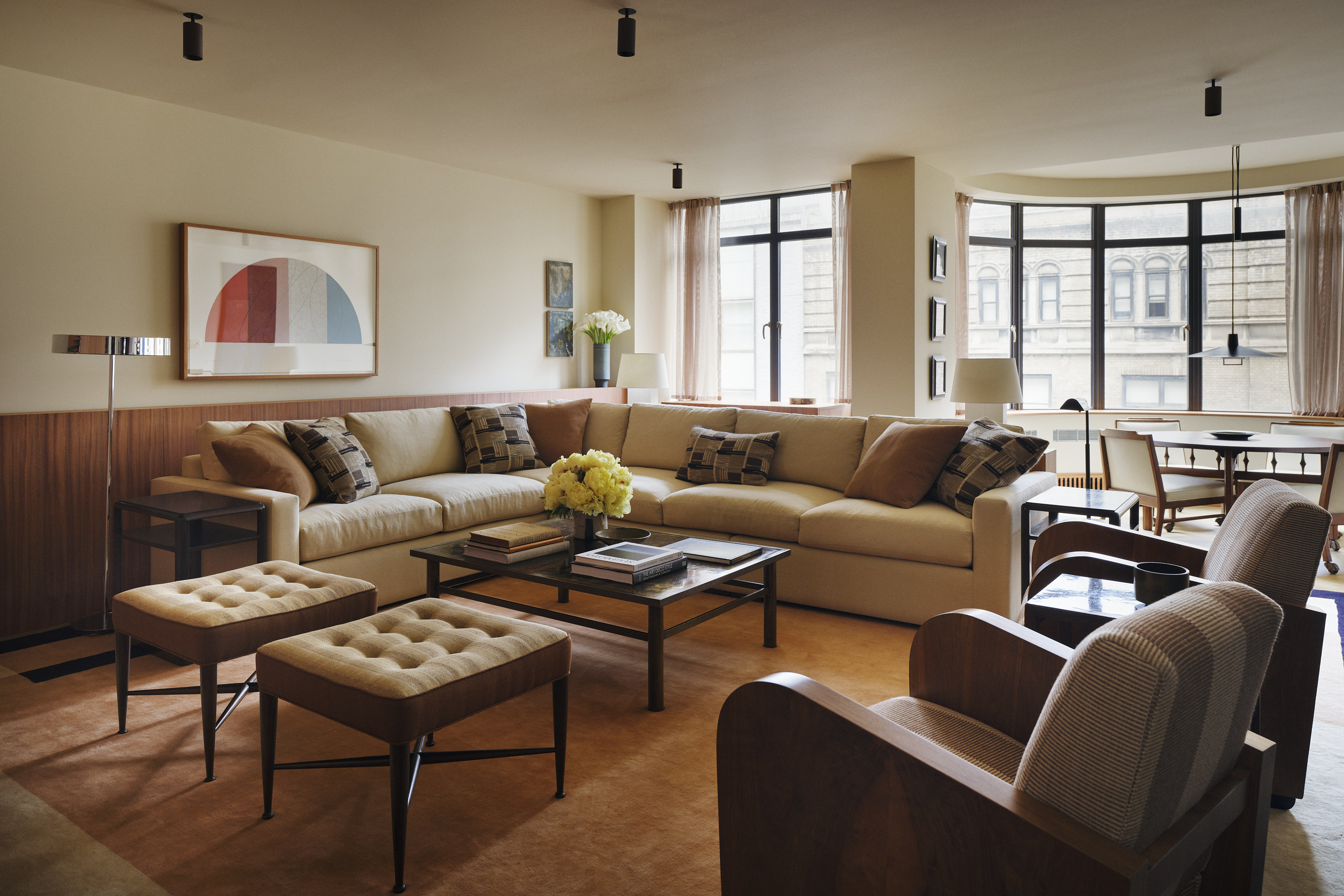
BENDING TIME THROUGH WARM MODERNIST DESIGN
Rockefeller Apartment
TYPE
Apartment renovation
LOCATION
Manhattan, NY
SCALE
2,700 sf
DATE
2025
STATUS
Completed
COLLABORATORS
Nicholas Potts, Design Architect
Armando Aguirre, Interior Designer
PUBLICATION
Architectural Digest
Apartment renovation
LOCATION
Manhattan, NY
SCALE
2,700 sf
DATE
2025
STATUS
Completed
COLLABORATORS
Nicholas Potts, Design Architect
Armando Aguirre, Interior Designer
PUBLICATION
Architectural Digest
Commissioned by John D. Rockefeller Jr. and Nelson Rockefeller and completed in 1937, the Rockefeller Apartments stands as a landmark of the International Style - arguably the city’s first. Architect Wallace Harrison, a key figure behind Rockefeller Center, designed the complex shortly after embracing Bauhaus principles, originally intending it as a middle-class residence with modest, functional units.
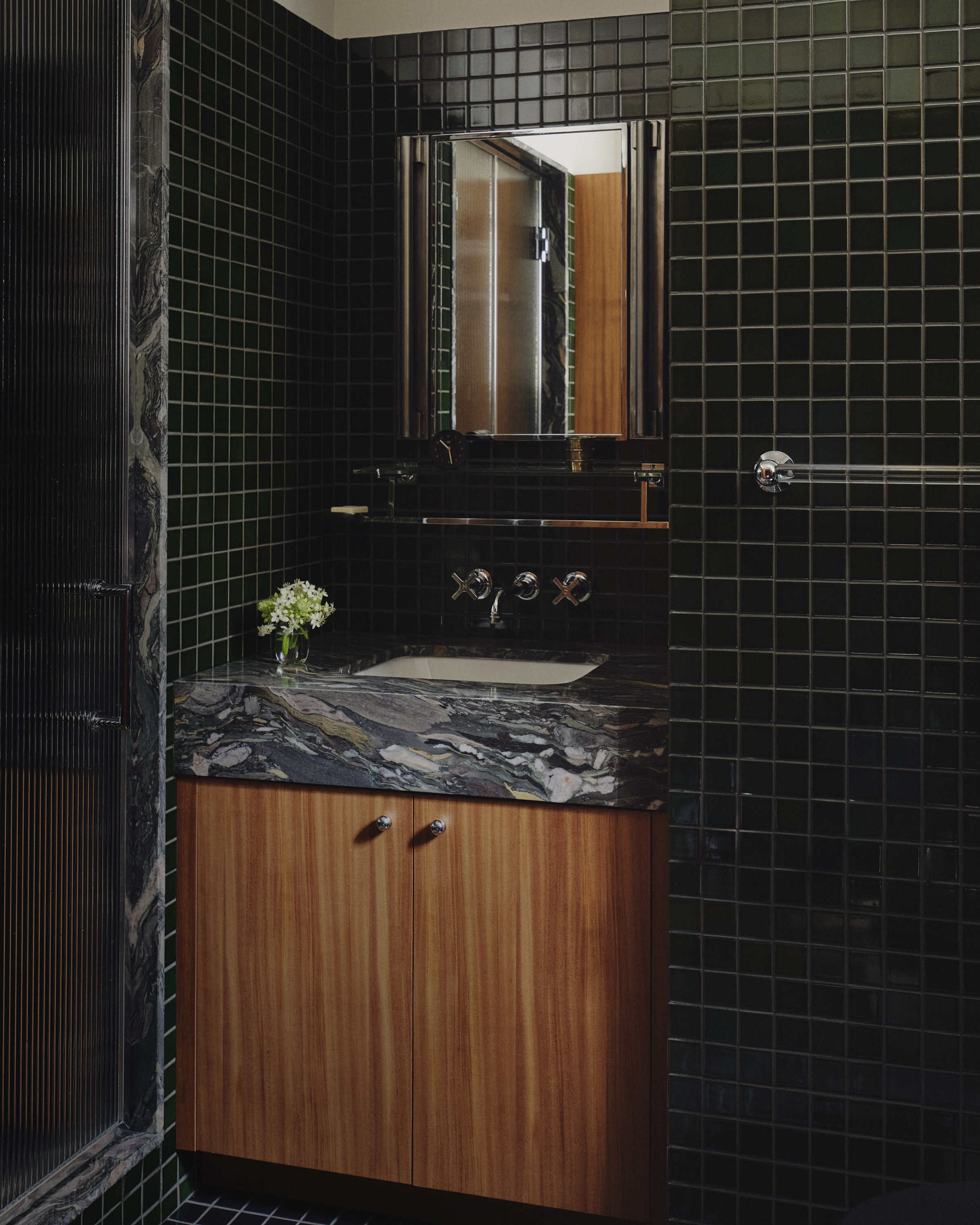
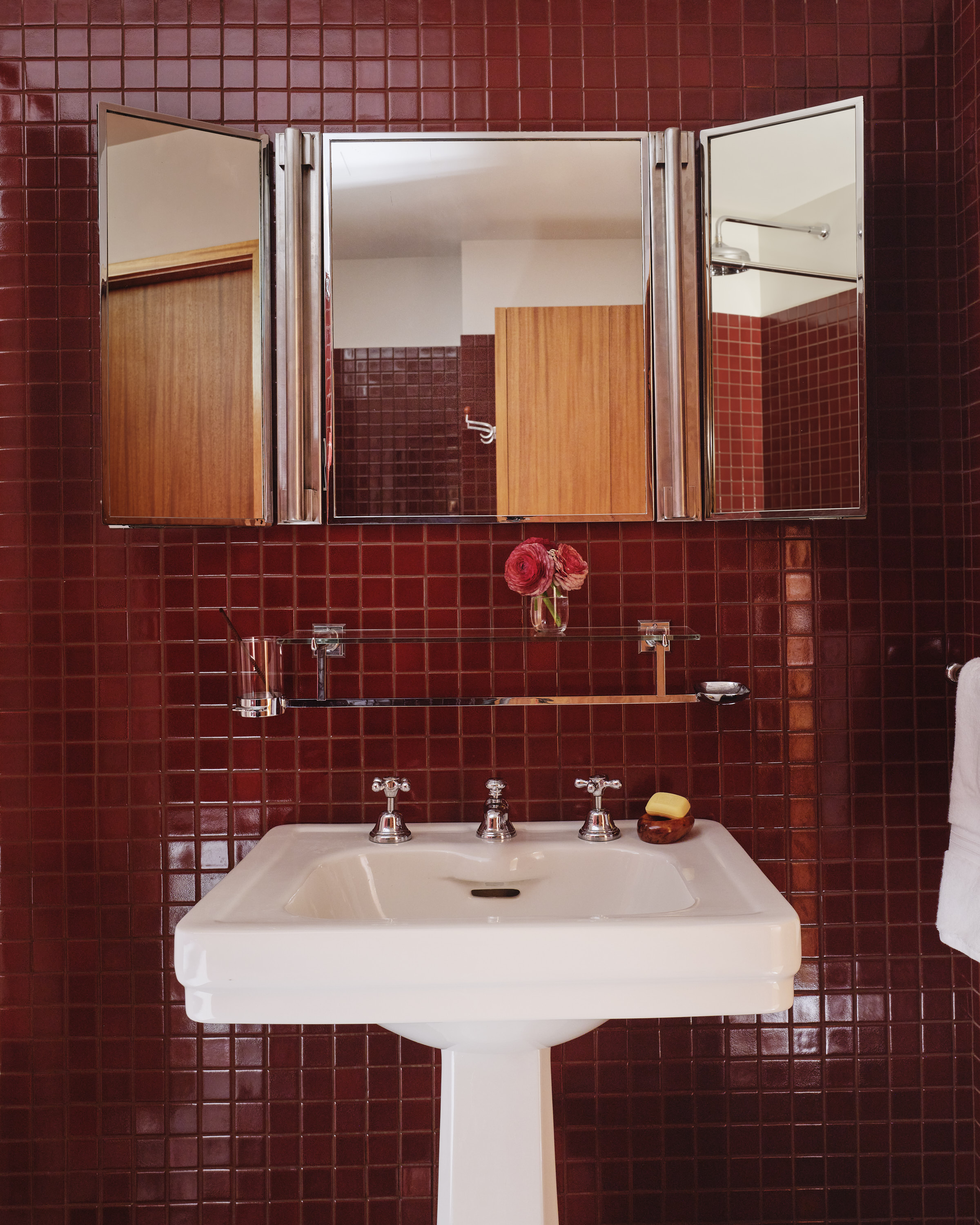
This 2025 renovation sought to elevate the space to its "International" namesake, honoring its modernist spirit and architectural heritage. Every design intervention was grounded in rigorous historical research and period-appropriate sourcing, ensuring the apartment felt revitalized rather than frozen in time.
The client - a dedicated collector of modern art and furniture who relocated from a Stanford White-designed home in Murray Hill -approached the acquisition as one would a fine work of art. To reflect this, majority of the interior is furnished with vintage pieces, featuring iconic designs such as Jens Risom Playboy chairs, a George Nelson shelving system, and an original Ellsworth Kelly painting.
This 2025 renovation sought to elevate the space to its "International" namesake, honoring its modernist spirit and architectural heritage. Every design intervention was grounded in rigorous historical research and period-appropriate sourcing, ensuring the apartment felt revitalized rather than frozen in time.
The client - a dedicated collector of modern art and furniture who relocated from a Stanford White-designed home in Murray Hill -approached the acquisition as one would a fine work of art. To reflect this, majority of the interior is furnished with vintage pieces, featuring iconic designs such as Jens Risom Playboy chairs, a George Nelson shelving system, and an original Ellsworth Kelly painting.
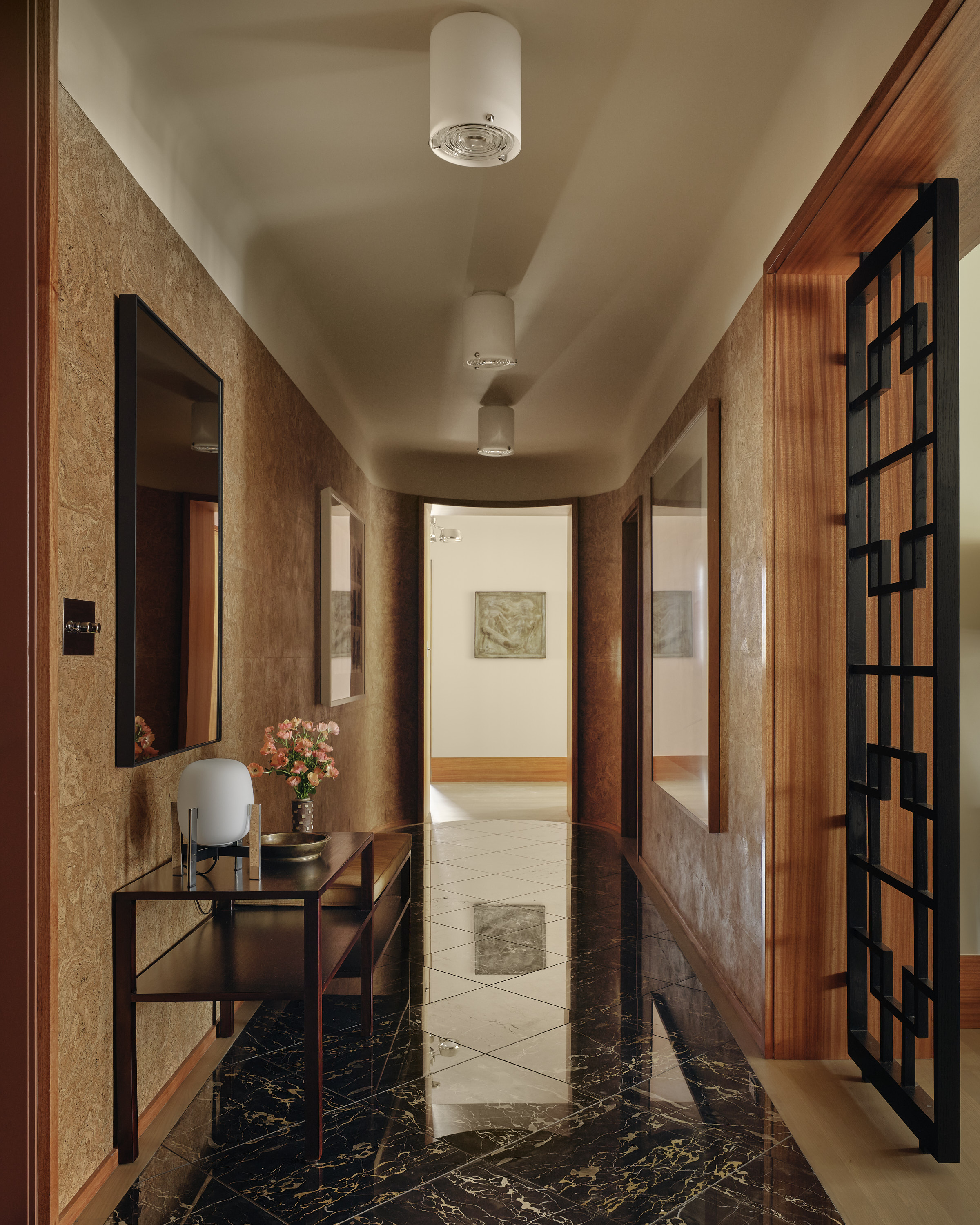
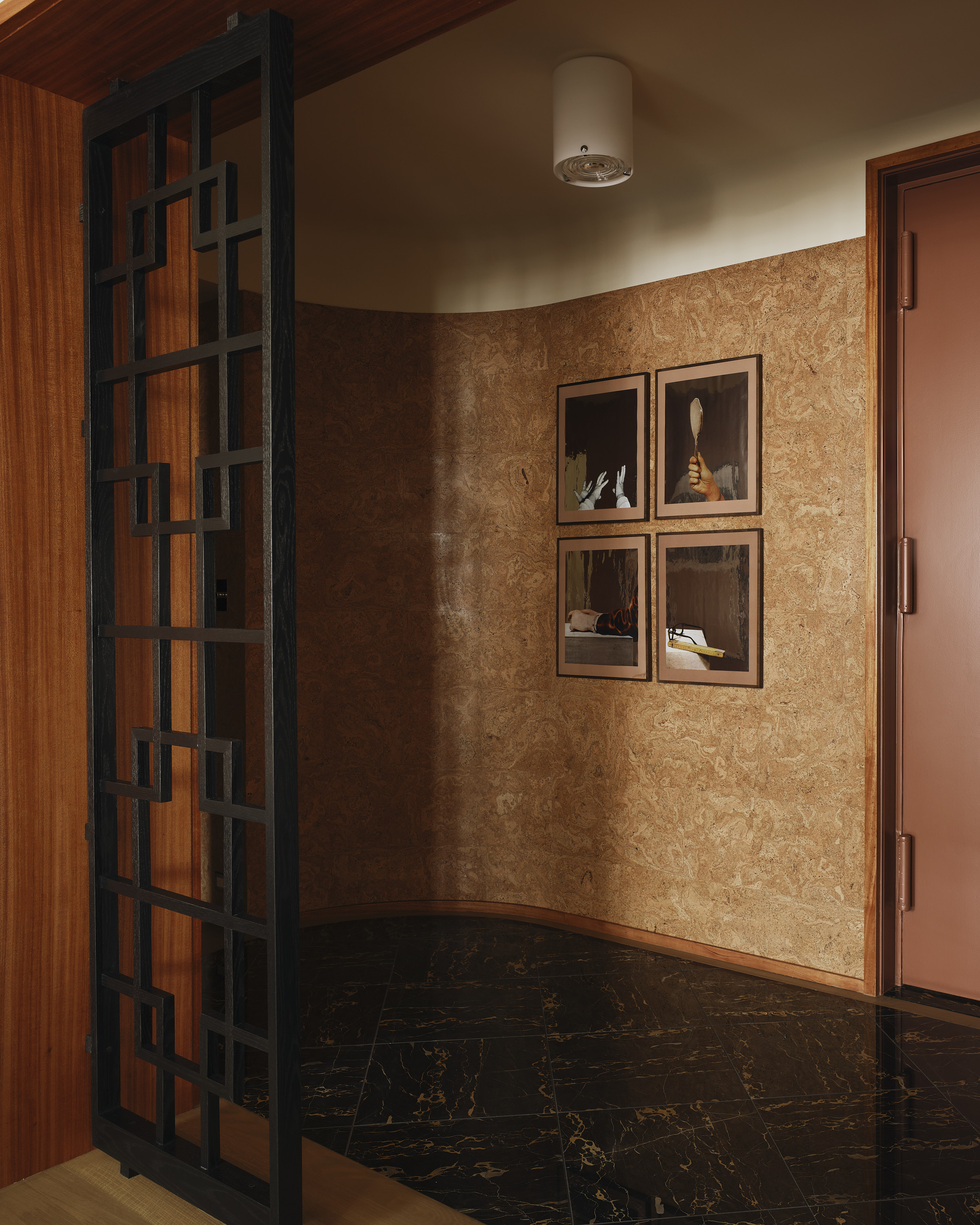
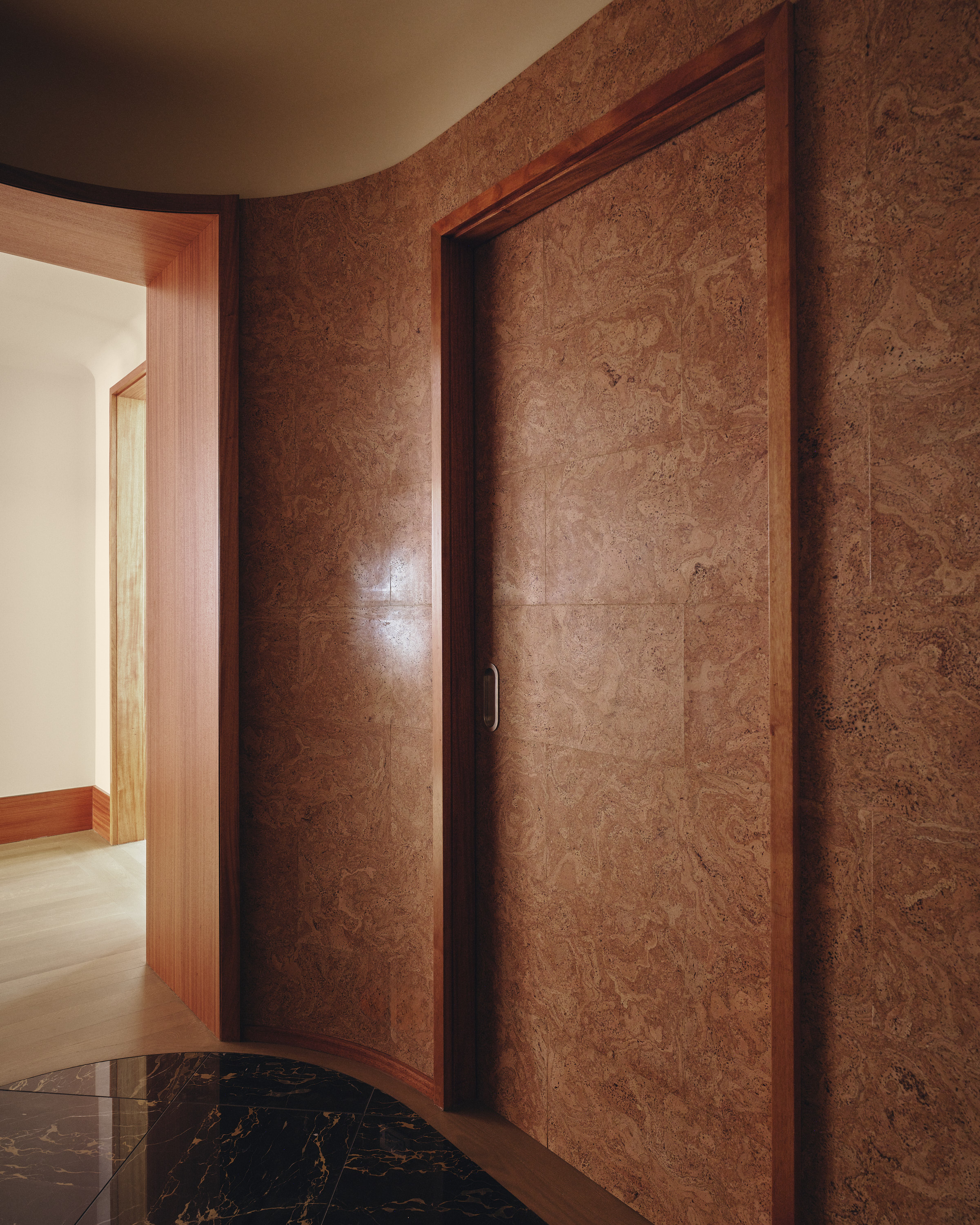
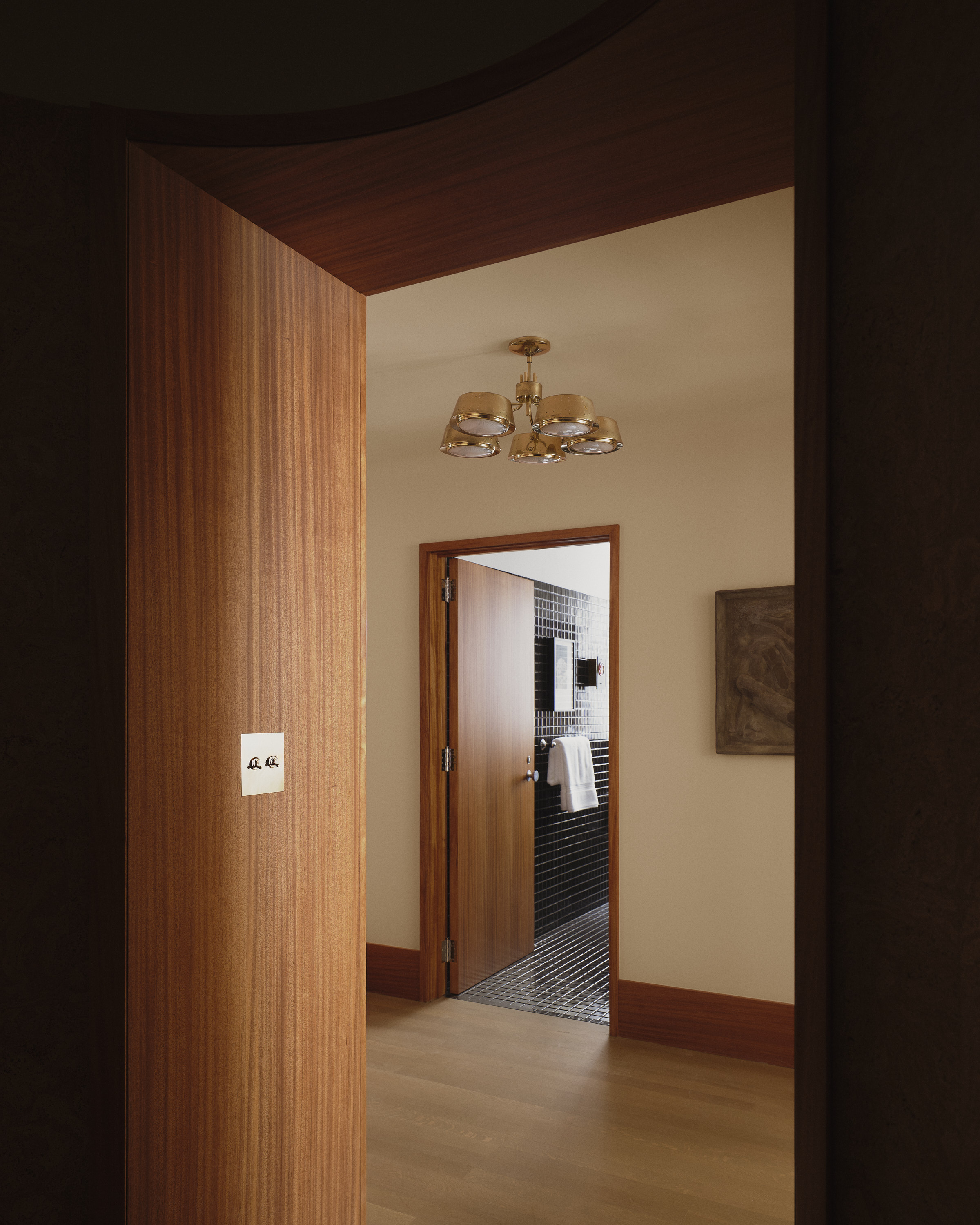
The design approach intentionally introduces warm, organic materials, specifically wood and cork, that were absent from the building’s original minimalist interiors. Expressed with bold intensity, these elements establish a foundation of tactile, sensuous comfort. At the entry, this transition is immediate: cozy cork meets Nelson Rockefeller-approved marble, creating a sophisticated softening of the threshold.
By relocating elements to the perimeter, a formal entrance gallery now anchors the home. Inspired by the grand prewar residences of New York, this layout successfully integrates the combined units, providing a sense of scale and ceremony that exceeds the building’s original, utilitarian floor plan.
By relocating elements to the perimeter, a formal entrance gallery now anchors the home. Inspired by the grand prewar residences of New York, this layout successfully integrates the combined units, providing a sense of scale and ceremony that exceeds the building’s original, utilitarian floor plan.
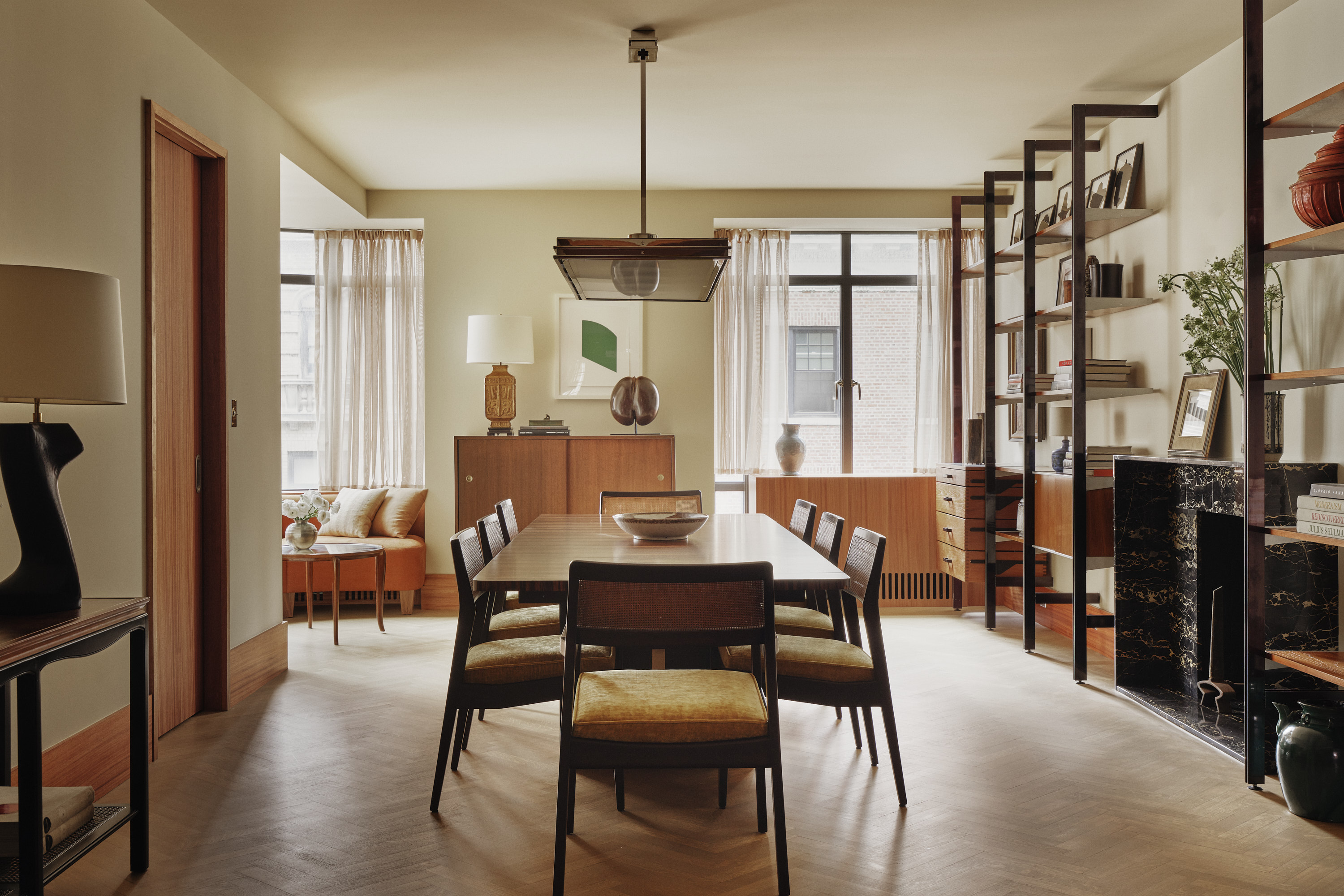
Warm materials like wood and cork create a base of sensuous comfort
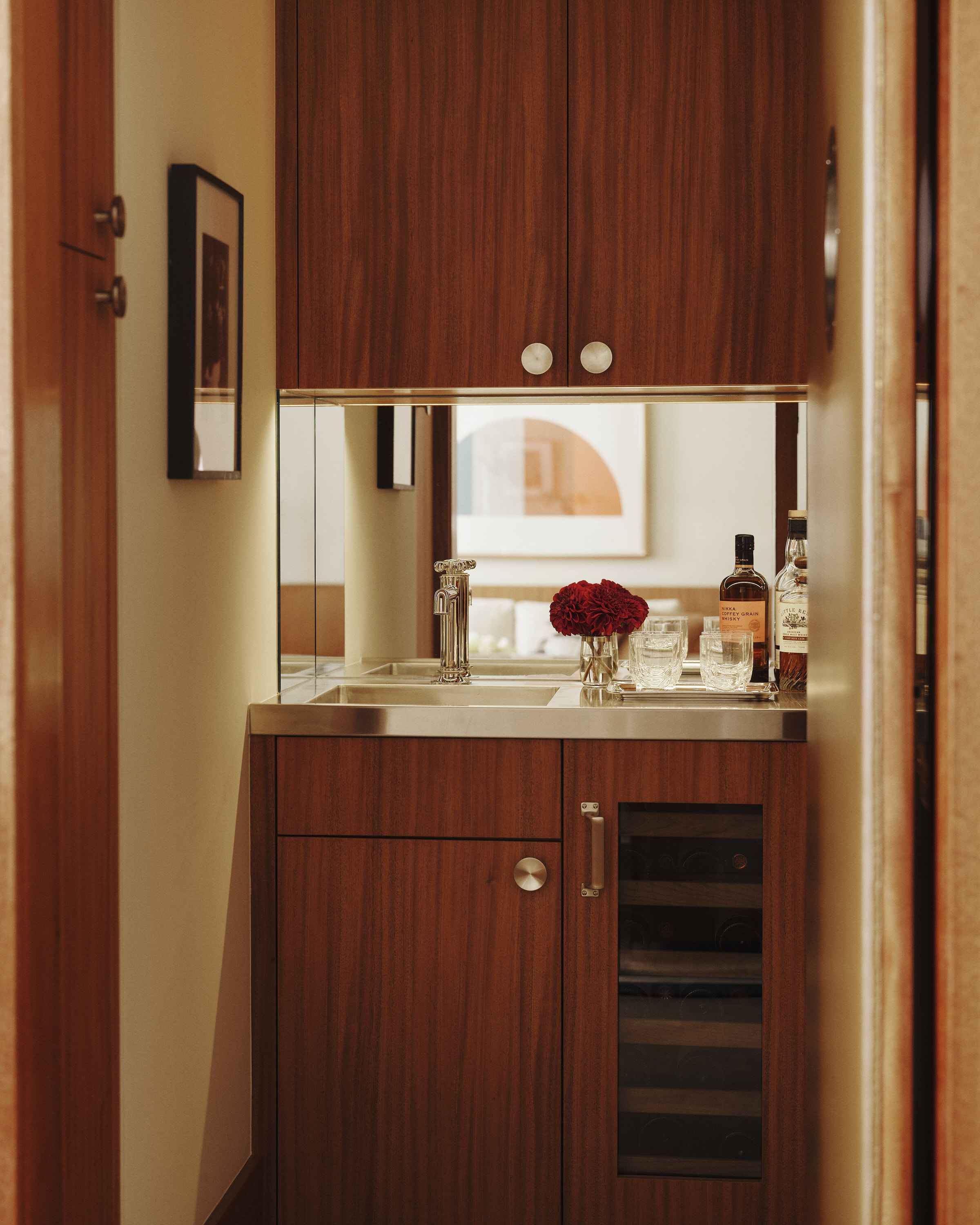
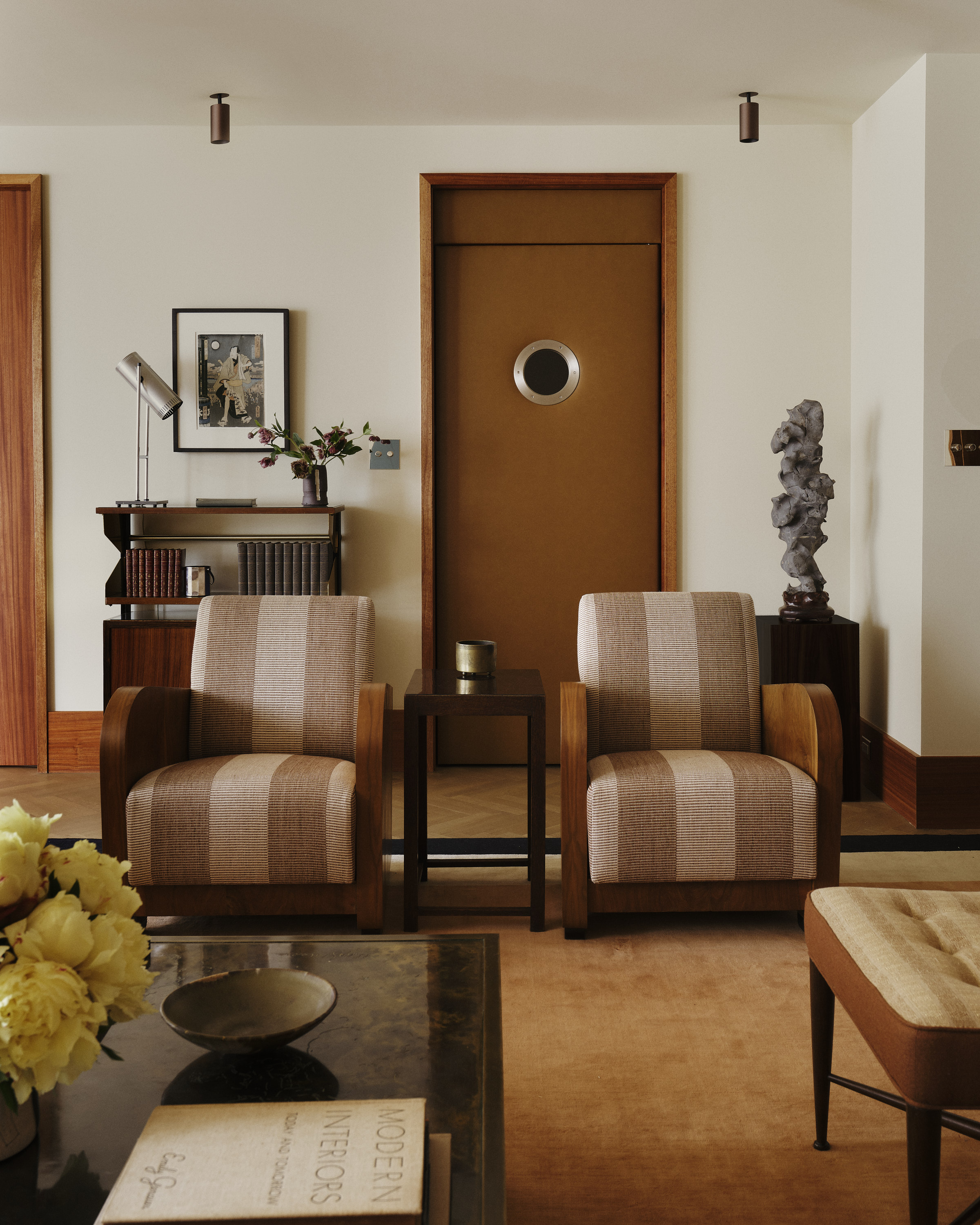
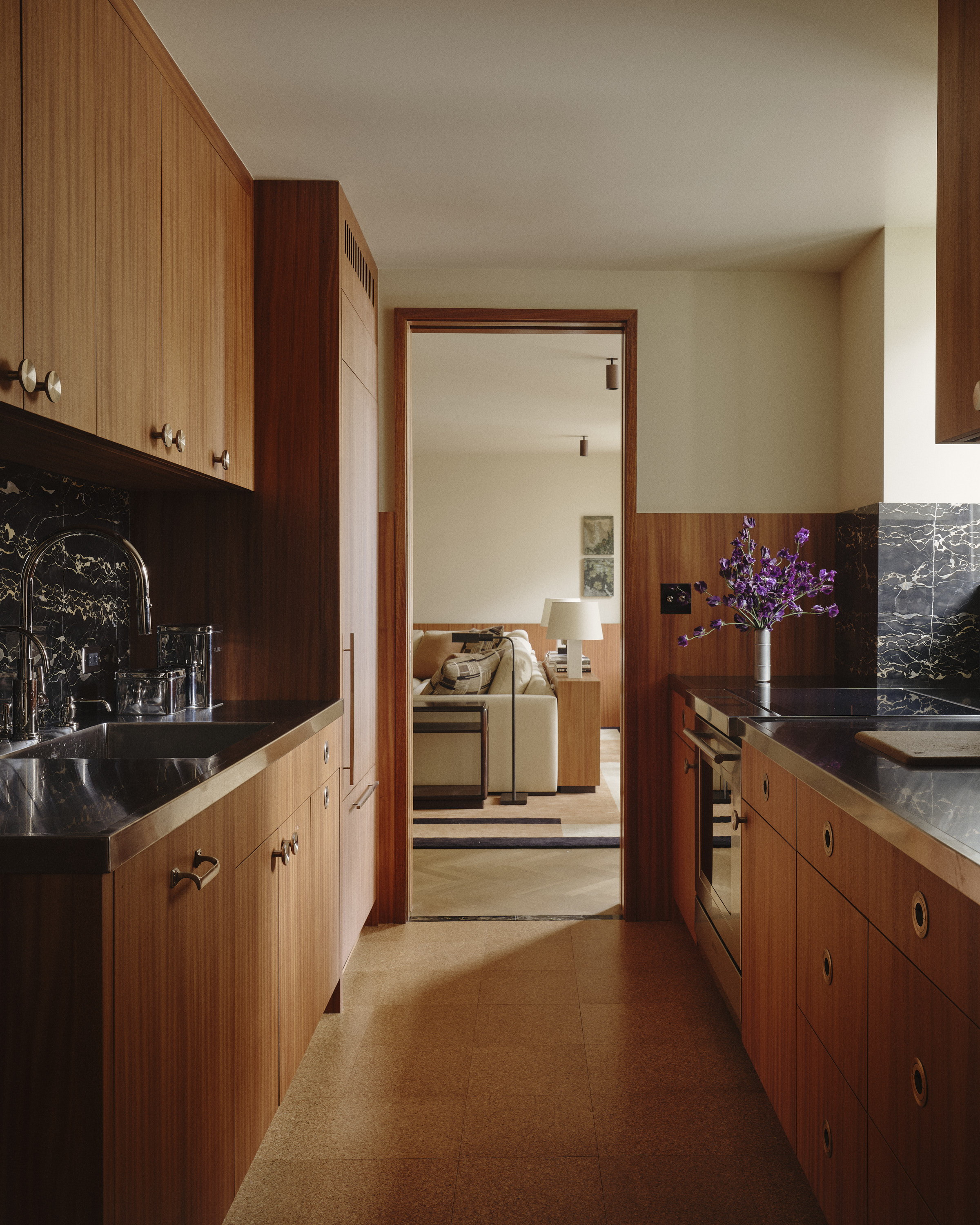
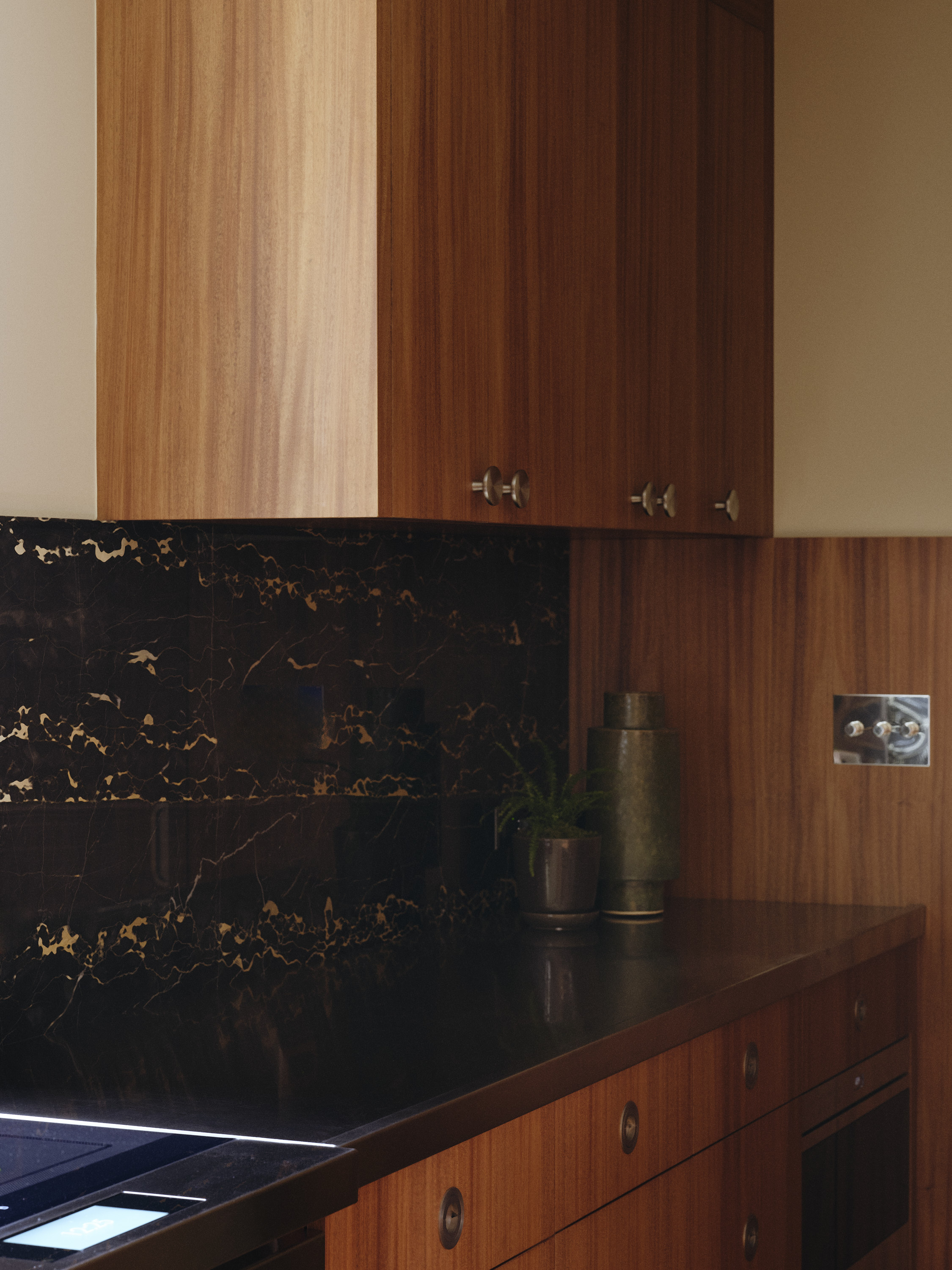
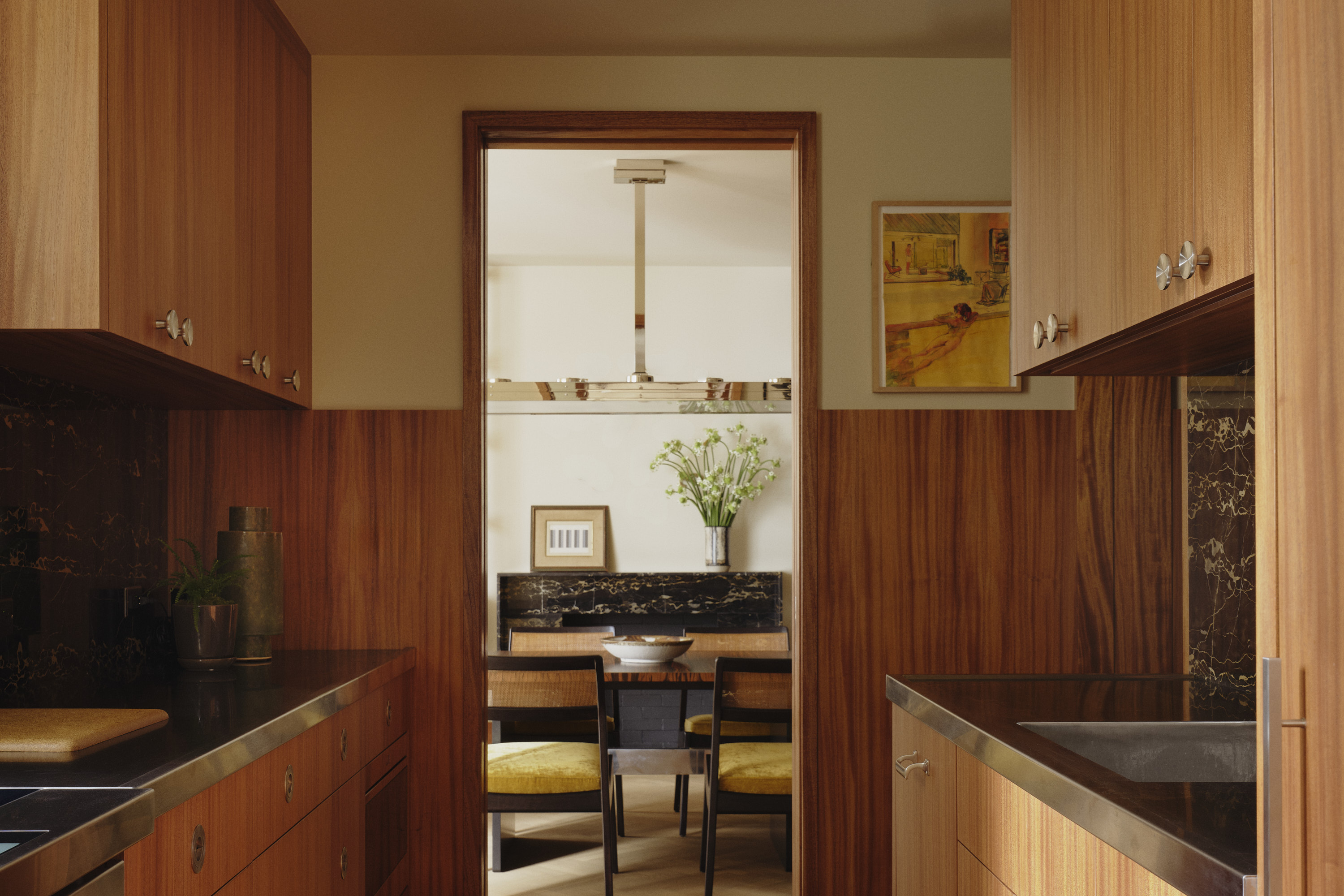
The result is a space that achieves what modernist manifestations often lack: warmth and approachability. The apartment successfully bends time without announcing the trick, transporting the space simultaneously backward and forward while maintaining elegant, functional design that adheres to modernist values and delivers exceptional livability.
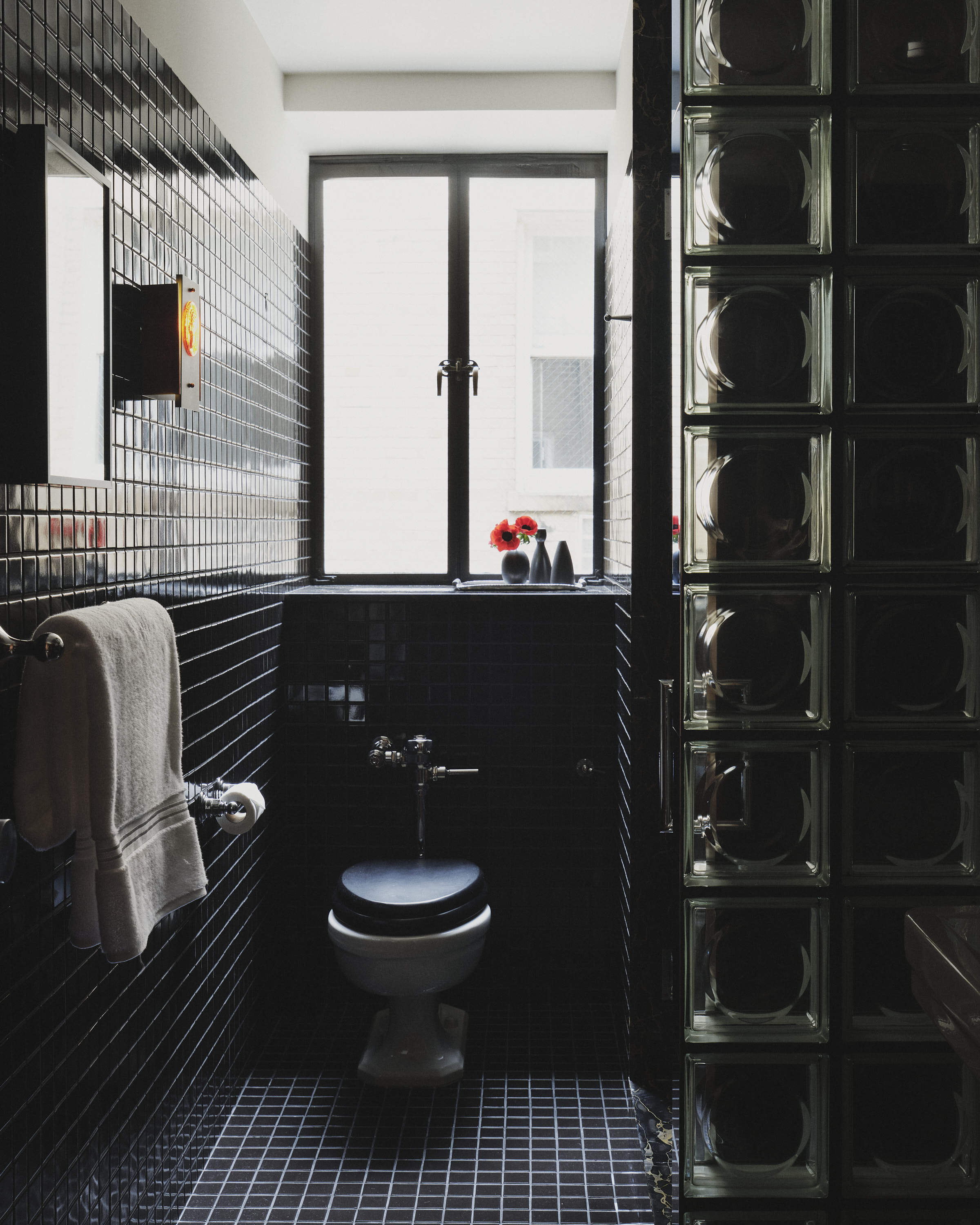
Photography by Adrian Gaut